
Lung cancer screening
- 26 May 2025
-
 1291
1291


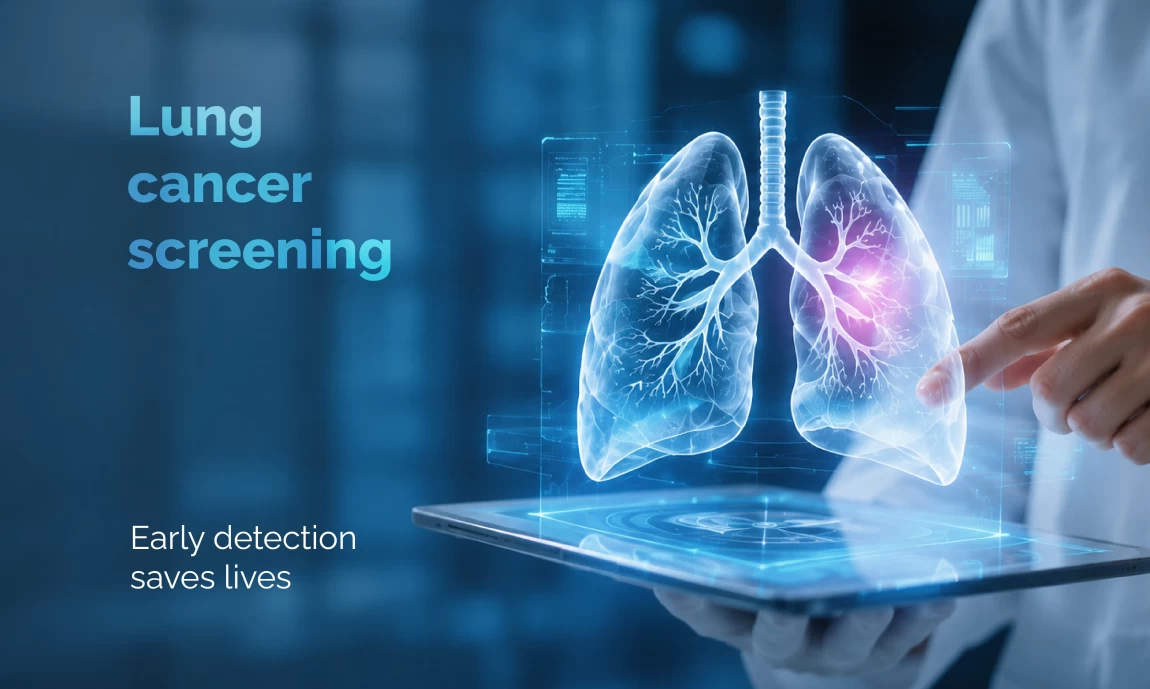

Lung cancer remains one of the leading causes of cancer-related mortality worldwide. The main challenge is the asymptomatic progression of the disease in its early stages. More than 70% of cases are diagnosed at advanced stages, when the possibilities for effective treatment are significantly limited. Therefore, lung cancer screening plays a crucial role in early detection and improving treatment outcomes.
Screening is a set of diagnostic measures aimed at detecting malignant tumors before symptoms appear. The main goal of screening programs is to reduce mortality through early diagnosis, when treatment is most effective.
Lung cancer screening is recommended for the following groups:
- People aged 50–80 years, especially those with chronic obstructive pulmonary disease (COPD) or fibrotic changes in the lungs;
- Long-term smokers with a smoking history of more than 20 years (including those who quit smoking less than 15 years ago). The smoking index can help assess risk:
number of cigarettes smoked per day × number of years of smoking ÷ 20
(a value of 20 or higher indicates a need for screening); - Individuals with a family history of lung cancer or occupational exposure risks (contact with asbestos, radon, heavy metals, and other carcinogens).
Lung Cancer Screening Profile
1. Imaging Diagnostics
Low-dose computed tomography (LDCT)
The gold standard method for lung cancer screening.
- Reduces lung cancer mortality by 20–25% (according to large international studies NLST and NELSON);
- Has high sensitivity and allows detection of small pulmonary nodules at an early stage.
Digital chest radiography
- A less sensitive method that is not always effective for early diagnosis;
- Not recommended as an independent screening tool.
Conventional chest X-ray
- Has low diagnostic value for screening purposes;
- Not recommended for early lung cancer detection.
2. Tumor Markers
| Tumor marker | Purpose |
|---|---|
| First-line | CYFRA 21-1 |
| First-line | NSE (Neuron-specific enolase) |
| Second-line | CEA (Carcinoembryonic antigen) |
| Second-line | ProGRP (Pro-gastrin-releasing peptide) |
First-line markers are key for monitoring disease progression and prognosis.
Second-line markers are used as additional tests and improve diagnostic accuracy.
For accurate diagnosis, tumor markers must be combined with imaging methods (CT, MRI) and, when required, biopsy.
3. Additional Laboratory and Functional Diagnostics
- Liquid biopsy – detection of circulating tumor DNA (ctDNA);
- Blood biomarkers (PD-L1, ALK, EGFR) – used for selecting targeted therapy;
- Pulmonary function tests (spirometry) – important before initiating treatment
Invitro Diagnostics offers the following services within the Lung Cancer Screening Profile:
- Chest and mediastinum CT scan without contrast;
- Neuron-specific enolase (NSE);
- CYFRA 21-1;
- Carcinoembryonic antigen (CEA);
- Spirometry;
- Pulmonologist consultation.
Lung cancer screening is an effective way to reduce mortality from one of the most aggressive types of cancer. Do not postpone taking care of your health — early diagnosis saves lives.