

Vessels on the Edge: The Path to Atherosclerosis
- 7 July 2026
-
 786
786



Vessels on the Edge: The Path to Atherosclerosis
Blood vessels are vital “structures” through which blood delivers oxygen and nutrients to all organs. They are constantly exposed to blood pressure, lipids, hormones, and other factors that, with age or under unfavorable conditions, can affect their structure and function.
The adult human body contains approximately 100,000 km of blood vessels, including arteries, veins, and capillaries.
There are approximately 20,000–25,000 arteries, and they are responsible for carrying blood from the heart to the organs. Among them, the most important are:
- Aorta — the largest artery, supplying blood to all organs.
- Coronary arteries — supply the heart muscle with blood.
- Carotid arteries — deliver blood to the brain.
- Vertebral arteries — merge to form the basilar artery and supply the brainstem and cerebellum.
An artery consists of three layers:
- Intima — the inner layer lined with endothelium; ensures smooth blood flow and prevents thrombus formation.
- Media — the middle muscular layer containing elastic fibers; provides the vessel’s ability to expand and contract in response to changes in blood pressure.
- Adventitia — the outer connective tissue layer containing the vessels of the vessels (vasa vasorum) and nerves; supports the nutrition and structure of the arterial wall.
On the path toward atherosclerosis, the first changes occur precisely in the intima: lipids accumulate here, an inflammatory response is activated, foam cells appear, and gradually an atherosclerotic plaque forms, narrowing the vessel lumen and reducing its elasticity.
The Plaque Development Path: How Atherosclerosis Forms
The inner layer of the artery is responsible for smooth blood flow. When the level of “bad” cholesterol (LDL) is elevated, lipids begin to accumulate in the vessel wall. The body perceives these deposits as damage, and immune cells — macrophages — are attracted to the area. They absorb fat and transform into foam cells, forming the core of the future plaque.
Over time, connective tissue and sometimes calcium accumulate around this core, making the vessel less elastic.
If an atherosclerotic plaque increases in size or becomes unstable, its rupture can trigger the activation of thrombus formation, resulting in the development of a blood clot. This, in turn, can cause acute vessel occlusion and significantly increase the risk of myocardial infarction or stroke.
The development of atherosclerosis is influenced by several key factors:
High cholesterol and lipid levels
Elevated levels of LDL cholesterol and triglycerides contribute to fat accumulation in the vessel walls, while HDL cholesterol helps remove excess cholesterol from the blood and protects blood vessels.
LDL (Low-Density Lipoprotein) - “bad” cholesterol that can accumulate on the walls of blood vessels.
HDL (High-Density Lipoprotein) - “good” cholesterol that helps remove excess cholesterol from the blood.
High Blood Pressure
Due to increased stress on blood vessels or changes in their elasticity, blood pressure rises. Constant pressure exerted by blood on the arterial walls accelerates vascular tissue damage and promotes the formation of atherosclerotic plaques.
Smoking and Alcohol Consumption
Nicotine damages blood vessels and reduces their elasticity, while chronic excessive alcohol consumption affects lipid levels and increases blood pressure.
Diabetes Mellitus and Metabolic Disorders
High blood glucose levels damage the vascular wall, and the combination with obesity significantly increases the risk of developing atherosclerosis.
Genetics
Genetic predisposition also plays an important role. If one of the parents has experienced myocardial infarction or stroke at a young age, the risk of developing cardiovascular diseases in the child increases. [1]
Statistical data show:
- If both parents remain healthy until older age, the probability of developing atherosclerosis in their offspring is approximately 20–25%.
- If one of the parents had cardiovascular disease at a young age (before the age of 50), the risk increases to 40–50%.
- If both parents had cardiovascular diseases at a young age, the risk may reach 60–70%.
- If cardiovascular diseases developed in parents after the age of 50, their influence on the early risk of atherosclerosis in offspring is minimal, and the probability remains close to the baseline level — approximately 20–25%. [2]
Age and Sex
As people age, blood vessels gradually lose their elasticity, and the risk of developing atherosclerosis increases. Men generally develop the disease earlier than women, which is related to differences in hormonal factors. After menopause, the risk of developing atherosclerosis in women increases significantly and gradually approaches that of men.
Age-related characteristics of atherosclerosis risk:
- Men: 45–55 years — a higher risk of early disease development.
- Women: 55–65 years — before menopause, estrogen provides partial protection of blood vessels; after menopause, the risk increases sharply.
Who is more prone to early development of atherosclerosis:
- At a younger age (before 50 years), men are more susceptible.
- After 55–60 years, the difference between sexes decreases, and the risk in women approaches that of men. [3]
Unhealthy Lifestyle
Lack of physical activity, obesity, and an unhealthy diet high in saturated fats and sugar create ideal conditions for lipid accumulation in blood vessels.
Prevalence of Atherosclerosis and Cardiovascular Diseases in Moldova
Cardiovascular diseases have consistently remained the leading cause of mortality in the Republic of Moldova over the past two decades. According to data from the National Bureau of Statistics, out of approximately 36,200 registered deaths in 2022, around 20,972 cases were caused by cardiovascular diseases, accounting for more than half of all deaths in the country.
Official statistics also show that cardiovascular diseases are responsible for approximately 58% of all deaths in Moldova. [4]
The most common complications of cardiovascular diseases are myocardial infarction and stroke, which account for more than 85% of deaths caused by these diseases, and approximately one-third of these deaths occur prematurely — before the age of 70.
How Doctors Assess the Risk: Diagnosis of Atherosclerosis
At the Invitro Diagnostics network, a comprehensive assessment of the risks of developing atherosclerosis and cardiovascular diseases is performed. Modern methods make it possible to identify early signs of vascular changes and evaluate lipid metabolism. The following investigations are available:
Blood Tests
Measurement of cholesterol, triglycerides, glucose, and inflammatory markers helps assess overall cardiovascular risk and identify lipid metabolism disorders. LDL, HDL, and total cholesterol levels are particularly important, as well as C-reactive protein, which indicates the presence of vascular inflammation.
For your convenience, Invitro Diagnostics offers 2 lipid profiles:
Basic Lipid Profile — a combination of 4 laboratory tests designed to assess fat metabolism in the body.
Extended Lipid Profile — includes the basic profile + homocysteine testing, an additional marker of cardiovascular risk and vascular wall condition.
Lipoprotein(a), Lp(a) is a genetically determined marker of cardiovascular risk. This test helps identify an inherited predisposition to atherosclerosis, myocardial infarction, stroke, and other cardiovascular diseases, even when the results of a conventional lipid profile are within the normal range. It is used to provide a more accurate assessment of an individual's cardiovascular risk and to guide prevention and treatment strategies.
Apolipoprotein A-I (Apo A-I) is the main protein of high-density lipoproteins (HDL), involved in the reverse transport of cholesterol from tissues back to the liver. This test helps assess the level of protective lipoproteins and is used for a more accurate evaluation of the lipid profile and cardiovascular risk.
Apolipoprotein B (ApoB) is a marker of the number of atherogenic lipoproteins in the blood. This test provides a more accurate assessment of the risk of developing atherosclerosis and cardiovascular diseases compared with a traditional lipid profile. It is also used to monitor the effectiveness of treatment aimed at reducing cardiovascular risk.
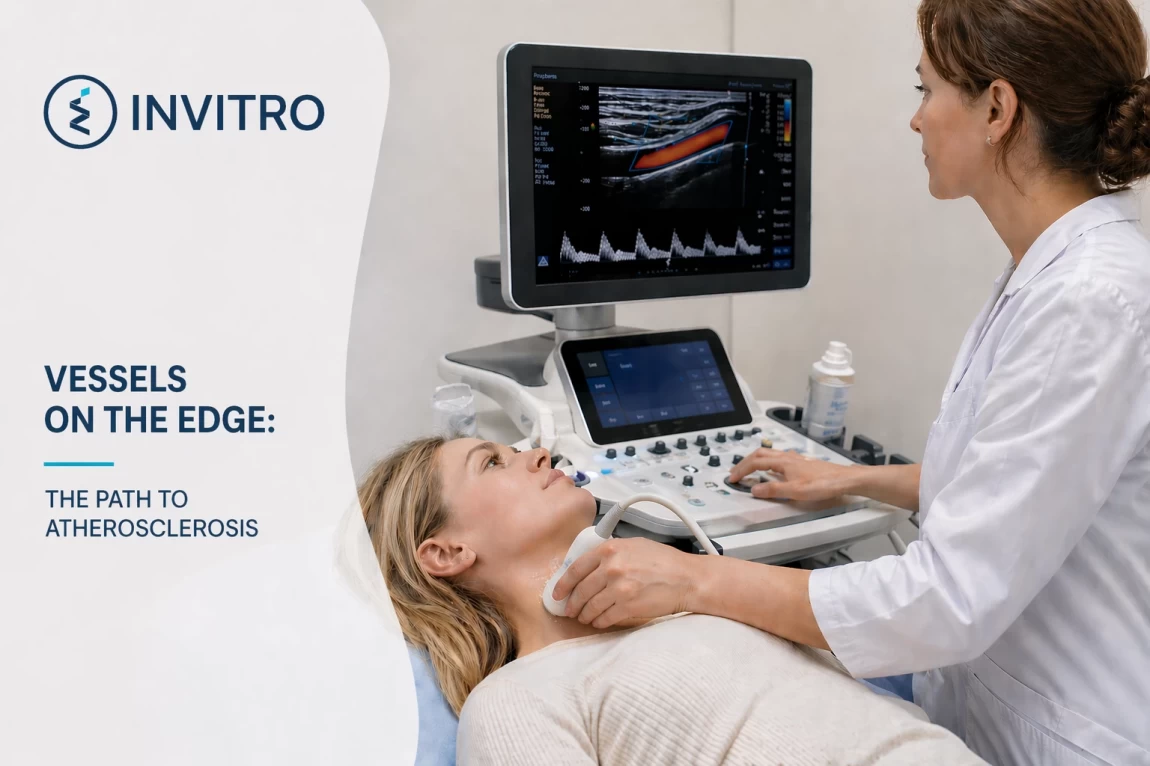
Color Duplex Doppler Ultrasound Examination of the Brachiocephalic Vessels (Intracranial and Extracranial)
Duplex scanning allows assessment of the structure of vessel walls and blood flow characteristics in the arteries supplying the brain. The examination is painless, safe, and helps detect atherosclerotic plaques, determine the degree of vessel narrowing, and evaluate the structure, density, and stability of plaques.
CT Angiography of the Carotid Arteries
A radiological examination method using contrast media. Computed tomography allows visualization of arteries and plaques in a 3D format, accurately determining the degree of arterial narrowing, assessing the risk of complications, and preparing a treatment plan, including surgical interventions.
Echocardiography (M-mode, 2D, Doppler) — Heart Ultrasound
Echocardiography provides information about the structure and function of the heart, including chamber dimensions, wall thickness, valve movement, and blood flow assessment. It is an important tool for diagnosing various heart conditions, such as ischemic heart disease, arrhythmias, valve disorders, and cardiomyopathies.
Early diagnosis of atherosclerosis allows assessment of vascular health, identification of risk factors, and initiation of preventive or therapeutic measures before serious complications develop. Regular screening is especially important for people over 40 years of age, as well as for those with a family history, diabetes mellitus, arterial hypertension, or elevated cholesterol levels.
Sources:
[1] https://www.healthy-heart.org/keep-your-heart-healthy/family-history-of-heart-disease/
[2] https://pmc.ncbi.nlm.nih.gov/articles/PMC12961215/
[3] https://academic.oup.com/eurheartj/article/42/34/3227/6358713?login=false
[4] https://world-heart-federation.org/world-heart-observatory/countries/moldova/